


Functional Checks for Finished Padlocks
A padlock must lock, release and operate consistently—not simply look correct after assembly. Functional testing confirms whether the cylinder, key, shackle and internal locking components work together according to the approved specification.
Raviron performs function checks during assembly and on finished padlocks before packing. The inspection method depends on the lock type, mechanism and buyer requirements. Conventional keyed padlocks, combination locks, alarm models and smart padlocks do not use exactly the same checkpoints.
This process supports importers, hardware distributors and private-label buyers who require reliable operation and consistent specifications across wholesale and repeat bulk orders.
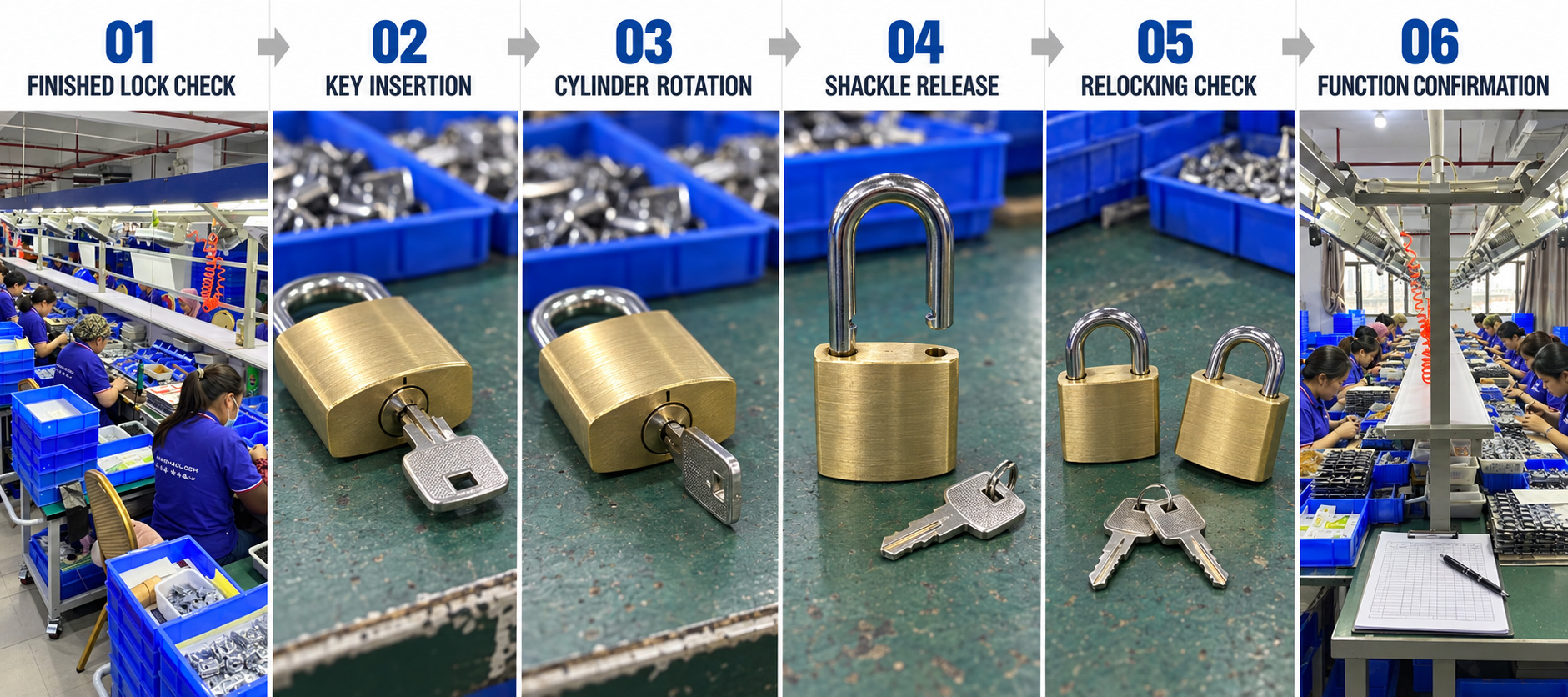 Key Insertion and Cylinder Operation
For keyed padlocks, the correct key is inserted into its assigned cylinder to check entry, rotation and removal. The key should operate without abnormal resistance, excessive looseness or interference from the cylinder components.
Testing also confirms whether the key can be removed in the required locked or unlocked position. This detail varies between lock structures and should be confirmed when it matters to the buyer’s market or application.
Key operation is closely connected to Product Assembly & Key Matching. KD, KA or grouped keying orders require additional control to prevent keys or locks from being mixed between production batches.
Shackle Locking and Release Checks
The shackle is opened and closed to verify alignment with the lock body and correct engagement with the locking mechanism. Inspectors check whether the shackle enters the body smoothly, locks securely and releases when operated with the correct key or mechanism.
The inspection also covers obvious looseness, restricted movement and incomplete locking. Long-shackle models require particular attention because dimensional variation or misalignment becomes more noticeable as shackle length increases.
If a project has special shackle diameter, internal height or clearance requirements, these dimensions should be approved through Size & Shackle Customization before bulk production.
Testing Different Locking Mechanisms
The function test is adjusted to the selected padlock type:
- Keyed padlocks are checked for key insertion, cylinder rotation, locking, release and key matching.
- Combination padlocks are checked for code setting, dial movement, correct-code opening and locked operation with an incorrect code.
- Alarm padlocks are checked for mechanical locking and the specified alarm activation function.
- Smart padlocks are checked according to the confirmed unlocking method, charging arrangement and electronic functions.
Testing scope should be agreed before production when the buyer requires specific operation cycles, sampling levels or additional performance tests. Any requested laboratory or third-party test must be reviewed separately because it may affect cost and lead time.
Defect Separation and Production Review
Locks that show difficult key movement, incomplete engagement, poor shackle return or mismatched keys are separated from acceptable products. The related cylinder, key or assembly condition is reviewed before the product can return to the inspected batch.
Functional defects should not be corrected only at the packing stage. Repeated problems may indicate a dimensional, component or assembly issue that requires production review. Inspection records also help identify whether a problem is isolated or affects a larger part of the batch.
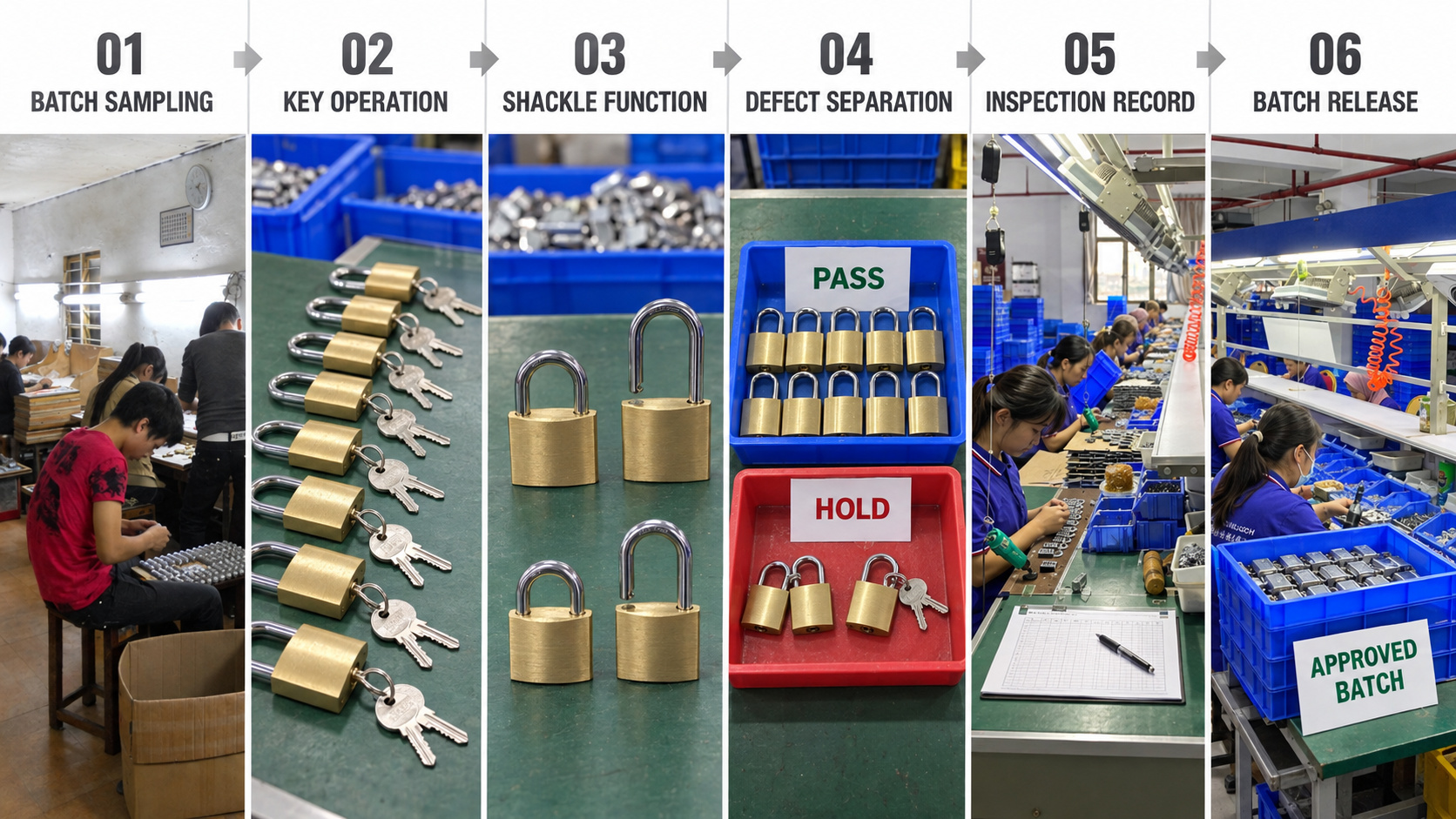 Final Confirmation Before Packing
After function inspection, accepted locks proceed to appearance, quantity, labeling and packaging checks. Products are compared with the confirmed specification and approved sample where applicable.
Before production begins, buyers should provide the model, quantity, keying arrangement, required functions and any special inspection standard. Packaging instructions should also explain how locks and keys must be paired, identified or grouped inside the retail and export cartons.
Final packing and shipment preparation are handled through the Packing & Export Preparation stage. Clear testing and packing instructions reduce the risk of key mix-ups, incorrect grouping and operational problems after delivery.